
Company says its cameras provide objective vehicle evidence, not facial recognition, while new policies address data retention, police searches and accountability
By Annie Dance | Lake Lure News | Cops & Congress | News & Commentary
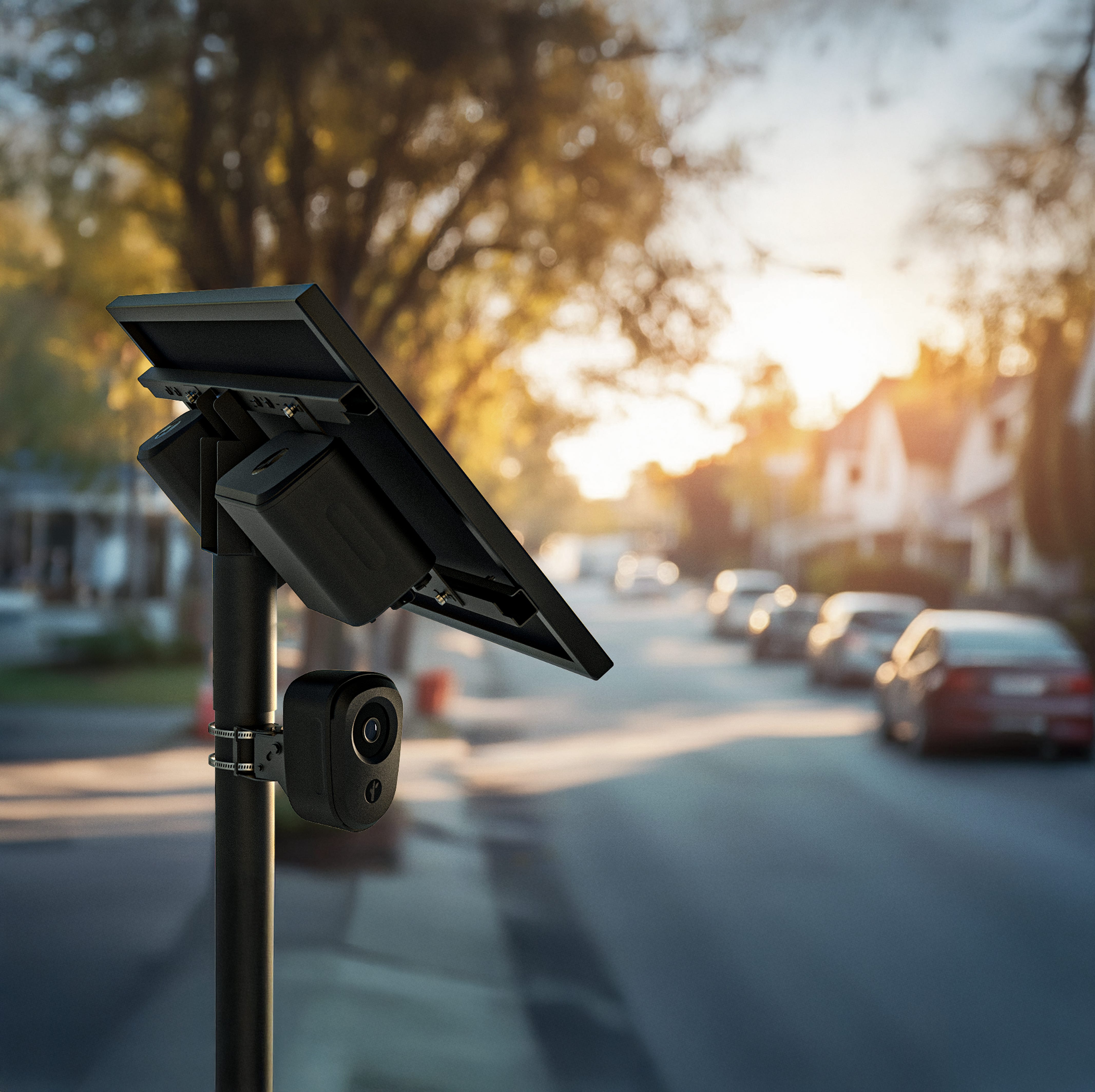
Flock Safety says its automated license plate reader technology is designed to give law enforcement objective evidence to help solve crimes while limiting how the resulting data can be used.
The company’s position comes as automated license plate readers, or ALPRs, face increasing scrutiny from privacy advocates, lawmakers and residents concerned about surveillance, data retention and law-enforcement access.
Flock, which was founded in 2017, says its public-safety technology is used in more than 5,000 cities. The company works with law enforcement, neighborhoods, businesses, schools, and elected officials.
In a company factsheet, Flock describes its platform as using license plate recognition technology in two primary ways: proactively, by providing alerts when a vehicle associated with a stolen vehicle, known suspect or missing person is detected; and investigatively, by helping officers determine whether vehicles were present at a crime scene.
Flock argues that vehicle information can provide critical investigative evidence when a license plate or vehicle description is otherwise unavailable.
The company cites national statistics in its factsheet claiming that about 50% of violent crimes and more than 80% of property crimes go unsolved without key evidence such as a license plate or vehicle description.
Those figures are company-cited statistics, not an independent assessment of Flock’s technology.
Still, the company’s central argument is straightforward: A vehicle can leave an important investigative trail, and ALPR technology can help police find it.
Flock says it tracks vehicles, not faces
One of the company’s most important distinctions is what its cameras do not do.
Flock says its LPR systems do not include facial recognition.
There is generally no right to privacy while in a public place. Beyond driving in a car on a public road, in North Carolina, it’s a one-party consent state, meaning anyone can legally record anyone anytime under state law.
Instead, the cameras capture vehicle-specific information and generate alerts based on characteristics associated with the vehicle rather than identifying the driver or passengers.
That means the system can help police determine that a particular vehicle was observed at a particular location without using facial recognition technology to identify the person inside.
That distinction is important in the broader surveillance debate.
An ALPR camera is not a continuous video camera monitoring everything that happens in its field of view. It is designed to capture vehicle observations that can later be searched for legitimate investigative purposes.
The technology nevertheless creates searchable information about vehicles traveling through public places, which is why questions about access, retention and oversight remain relevant.
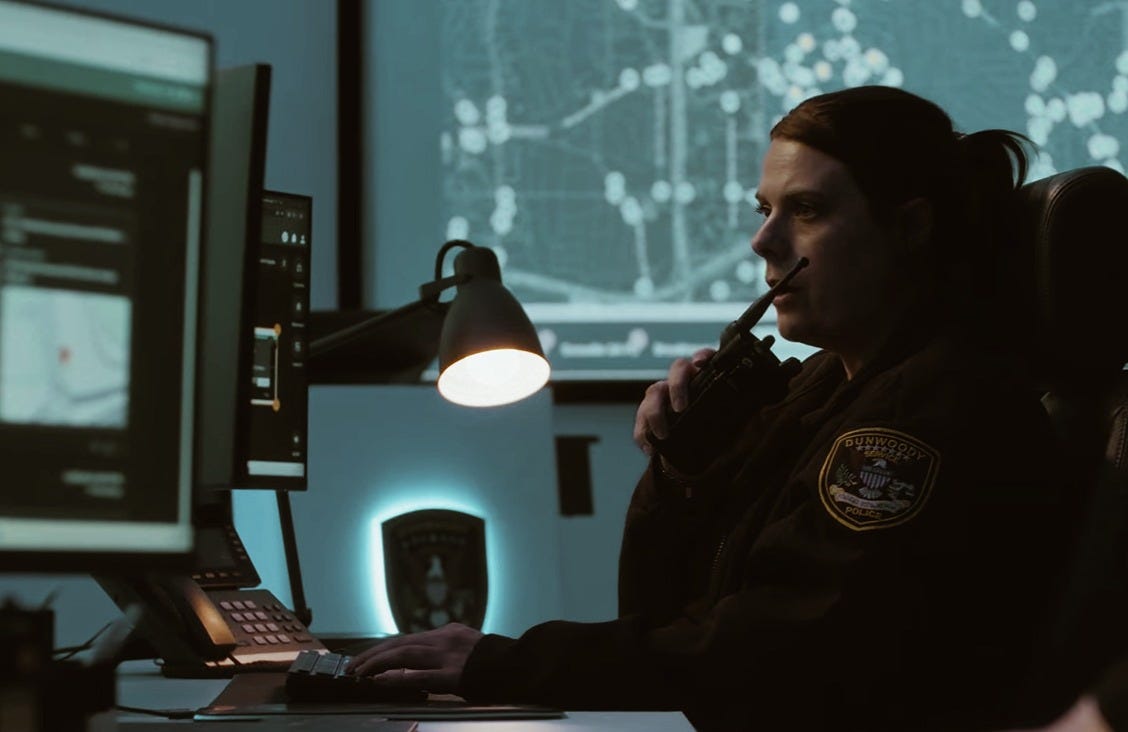
The company says customers control the data
Flock also says its customers own and control the data collected by their LPR cameras.
According to the company factsheet, Flock does not sell customer data to third parties.
That puts local agencies and governments at the center of the policy debate.
A community considering an ALPR system has to determine not only whether the technology is useful but also what policies govern its use.
Who can search? What qualifies as a legitimate search? How long is data retained? Can another agency access the information? What happens if an officer misuses the system?
Those questions are controlled by the local end-user, the law enforcement agency, and become particularly important as ALPR networks expand across jurisdictional boundaries.
Every search is logged
Flock says its system is designed to create an audit trail for law-enforcement searches.
According to the company’s factsheet, every user must enter a search reason or case number before searching. That information is preserved in an audit trail.
The purpose is to make searches accountable.
That safeguard does not prevent every possible misuse. But it creates a record that can be reviewed when questions arise about why an officer searched for a particular vehicle.
Flock has also announced additional controls intended to identify abnormal user behavior and, in some circumstances, automatically suspend access pending review.
Those changes come as police technology companies face increased scrutiny over whether officers can use investigative databases for purposes unrelated to legitimate law-enforcement work.
Data retention is changing
Flock’s privacy policies have also become part of the debate.
The company’s factsheet provided to communities states that Flock historically defaulted to permanently deleting LPR data after 30 days on a rolling basis.
More recently, however, Flock announced changes to its data-retention policies, including a move toward a seven-day default retention period.
The company has said investigators can preserve specific information when it becomes relevant evidence in an active investigation.
The shorter retention period addresses one of the central concerns raised by privacy advocates: how long information about vehicles belonging to people who are not suspected of crimes should remain searchable.
The basic premise is that information that is not needed should not remain available indefinitely.
Security is part of the equation
Flock says its data is stored in Amazon Web Services, or AWS, cloud infrastructure and encrypted end-to-end.
Cybersecurity is an important part of the debate because a database containing vehicle observations would be valuable information if improperly accessed.
Flock has said it is strengthening its cybersecurity program and has engaged outside security experts to review its systems.
For local governments, that means cybersecurity should be part of the procurement and oversight conversation rather than an afterthought.
Flock technology is already in Western North Carolina
The debate has particular relevance locally because Flock cameras are already being used in Western North Carolina.
The Rutherford County Sheriff’s Office uses Flock cameras as part of its investigative tools. Open-source public records reviewed for Cops & Congress indicate that searches have been associated with a range of investigations, including murder and drug cases.
The existence of those searches does not mean an individual whose vehicle appears in the system is suspected of a crime.
An ALPR camera can capture vehicles belonging to people who are simply driving through an area.
That is precisely why retention and search controls matter.
The investigative value comes from being able to search vehicle observations when there is a legitimate reason to do so.
The privacy concern comes from the possibility of searching or retaining those observations without a legitimate reason.
The debate is about guardrails
There are legitimate arguments on both sides of the ALPR debate.
Supporters say the technology can help police locate stolen vehicles, find missing people, identify vehicles associated with violent crimes and generate investigative leads that might otherwise be unavailable.
Privacy advocates argue that a large network of cameras can create an extensive record of where vehicles have been observed and that improper access could turn a public-safety tool into a surveillance tool.
Both points can be true.
The existence of privacy concerns does not mean the technology has no public safety value.
And the existence of public-safety benefits does not mean agencies should receive unlimited access.
That is why the policies surrounding the technology matter.
Flock’s factsheet points to several safeguards: customers control their data, searches are logged, data is subject to retention limits, the system does not use facial recognition and information is encrypted.
The company’s newer policies add additional controls around retention, search auditing and access.
What communities should ask
For local governments and residents, the most useful debate may not be whether Flock is simply “good” or “bad.”
The better questions are specific to each law enforcement agency utilizing the technology.
How is it funded? What information is collected? How long is it retained? Who can search it? What reason must an officer provide? Are searches audited? Can outside agencies search local cameras? What happens when an officer violates policy? How is the data secured? Are local policies available for public inspection? Do you opt-in to the Flock Transparency Portal?
Those are reasonable questions for any government technology.
Flock’s factsheet makes the company’s position clear: The technology is intended to capture objective vehicle evidence and put actionable investigative information into the hands of law enforcement.
The company argues that the technology can improve public safety without relying on facial recognition or unlimited data retention.
Whether that balance works in practice ultimately depends on both the technology and the agencies operating it.
For Western North Carolina, that means the conversation should continue — with public records, clear policies and measurable accountability.
ALPR cameras may be able to tell police where a vehicle was.
The public should be able to know how that information is being used.


—
This newsletter is supported by readers like you. Paid subscribers have access to the full archive.
—
🏛️ All those mentioned are presumed innocent until proven guilty.
Learn more about this newsletter, ethics policy, how you can help shape this work, and support it. Follow on X and Facebook. Send constructive criticism, fan mail, and tips with public documents for future stories: CopsandCongress@gmail.com
I've seen their "contracts" pretending to be quotes so nobody will think the LEO staff is signing off on anything important. This company is deceptive. Now I know why it is so hard to get rid of Flock Group, Inc. once it gets it's claws into a local law enforcement agency. There are buried fees too.
Officers and detectives are not trained to review contracts or even have experience doing it on the job. Flock keeps the actual agreement the officers are signing off on, as a "link" to it's website T&Cs that can change at any time. They don't call the contract a contract. The document is labelled a quote. Anyone who has worked in corporate sourcing is going to see through this BS, but a law enforcement professional probably won't - and Flock knows that.
The other problem is the data handling. We are paying for a company to collect data on our private movement in our community, and then sell, lease, or share it for profit --> with none of that money coming back to us.
Flock should be paying US to put it's cameras up and harvest our private data. This is as bad as us paying for the military to spray us with toxic substances from airplanes for research and geoengineering projects they deny even doing.